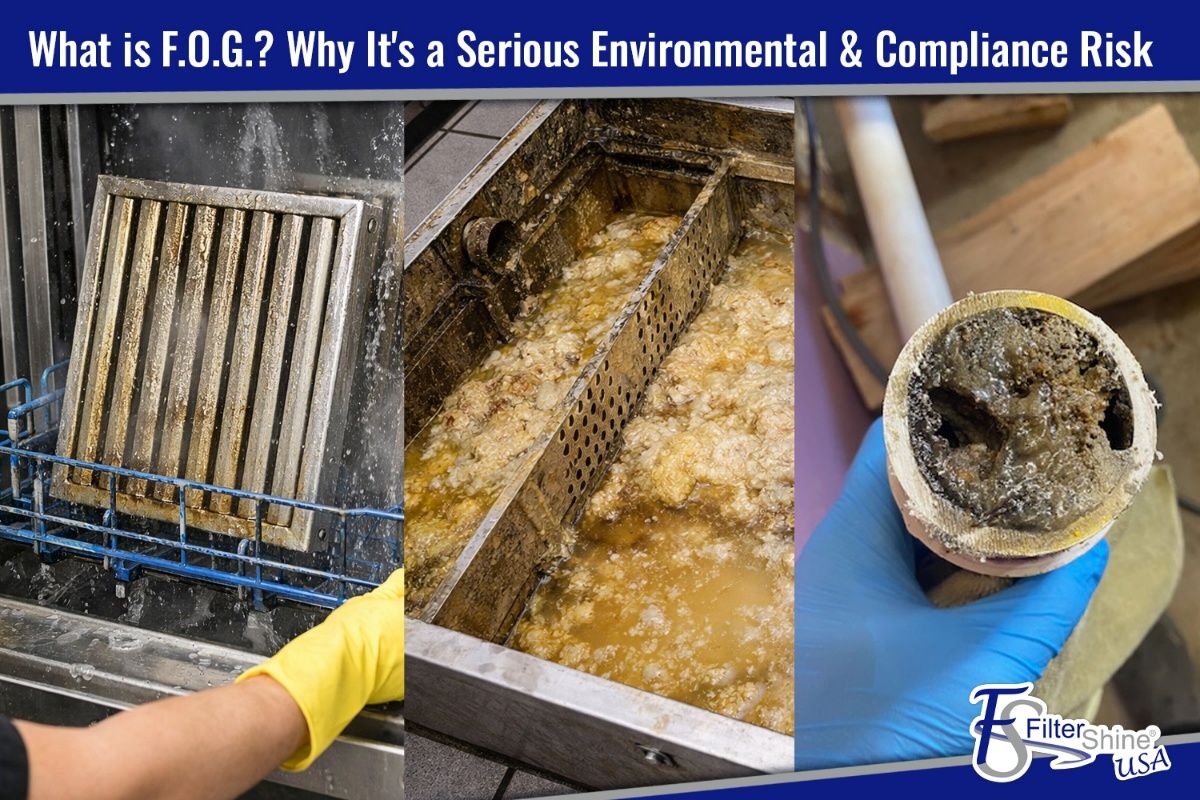
What is F.O.G? Why It’s a Serious Environmental & Compliance Risk
In a busy commercial kitchen, grease is simply part of the job. From cooking oils to food residue, it’s something every restaurant deals with daily. However, what many operators don’t realize is that where that grease ends up can have serious consequences.
Fats, Oils, and Grease, commonly known as F.O.G., don’t just disappear once they go down the drain. Over time, they build-up inside plumbing systems, strain municipal infrastructure, and contribute to environmental damage. It’s worth taking a closer look at how everyday practices, like washing grease filters in-house, can create hidden risks for your business and the environment.
What is FOG? (Fats, Oils, and Grease Explained)
F.O.G. refers to the byproducts of cooking, including animal fats, oils used in frying, butter, sauces, and food scraps. While these substances may appear harmless when rinsed away, they behave very differently once inside your plumbing system.
When hot, grease flows easily as a liquid. But as it cools, it begins to solidify and cling to the inner walls of pipes. Over time, these layers accumulate, gradually restricting flow and setting the stage for serious blockages.
How F.O.G. Impacts Plumbing and Infrastructure
Once F.O.G. enters your plumbing system, it doesn’t take long for problems to develop. The grease sticks to pipe walls, narrowing the pathway for water and catching additional debris along the way. What starts as a thin coating can quickly grow into a thick obstruction.
This buildup often leads to slow drains, backups, and unexpected plumbing failures. For restaurants that can mean costly repairs, operational downtime, and even health violations. On a larger scale, F.O.G. contributes to major sewer blockages, commonly known as “fatbergs”, which cities spend millions of dollars each year to remove.
The Hidden Problem: In-House Filter Cleaning
Many restaurants clean grease filters usings sinks or commercial dishwashers. While this may seem like a routine and efficient practice, it introduces a significant amount of grease directly into the drainage system.
Each time filters are washed in-house, concentrated grease is flushed into pipes and grease traps. This can quickly overwhelm your system, accelerate buildup and increase the likelihood of blockages. What feels like a simple, cost-effective task can ultimately create long-term operational and environmental challenges.
Environmental Impact of F.O.G.
The impact of F.O.G. extends far beyond your kitchen. When grease enters municipal wastewater systems, it can contribute to sewer overflows that release untreated waste into local waterways. These events can contaminate rivers and lakes, harm wildlife, and pose risk to public health.
As environmental regulations continue to tighten, reducing F.O.G. at the source has become an important part of responsible restaurant operations. Small changes in how grease is handled can make a meaningful difference in protecting local ecosystems.
The Overlooked Factor: Rooftop Grease Containment
While most discussions around F.O.G. focus on what goes down the drain, there’s another critical and often overlooked source of grease pollution, your rooftop.
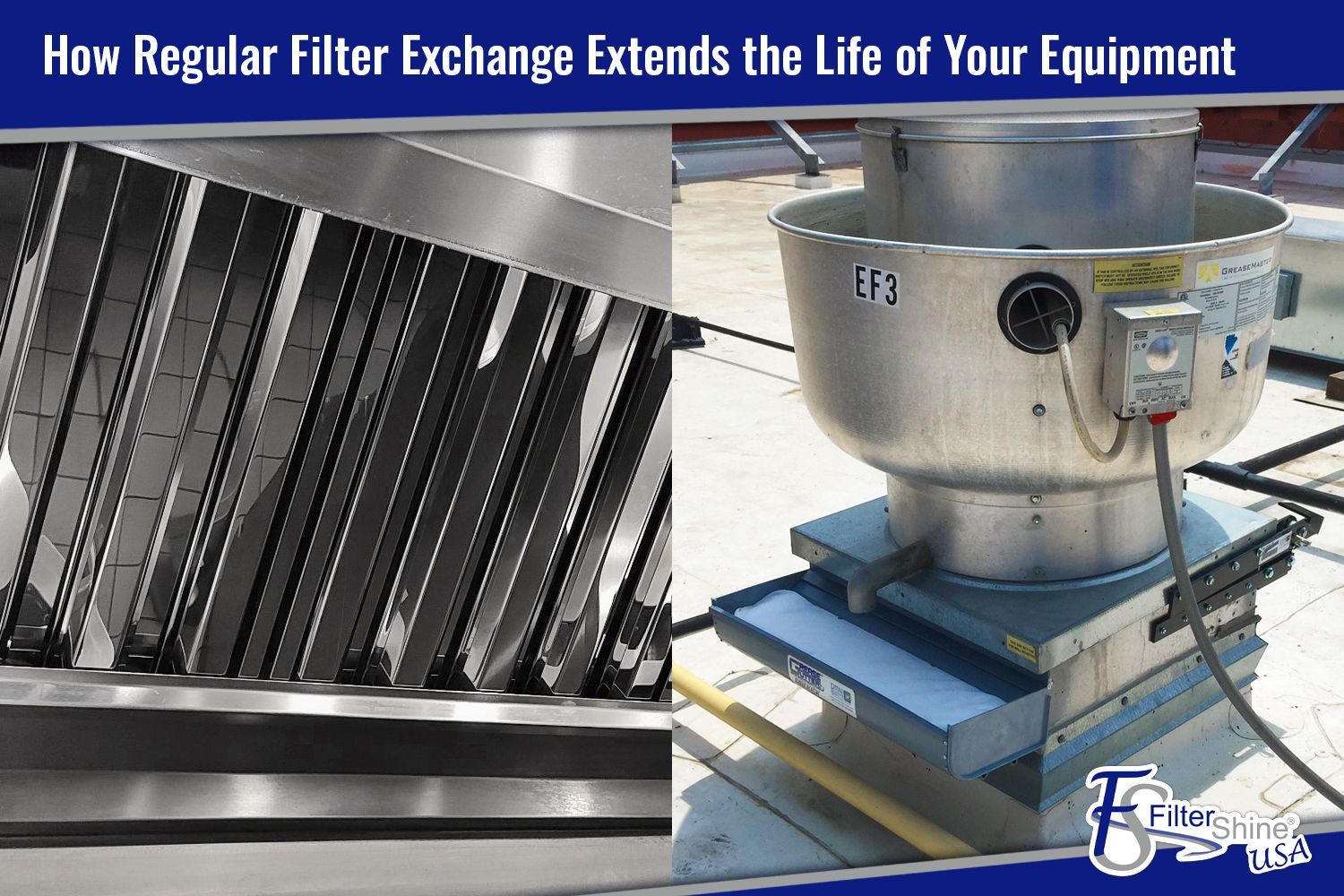
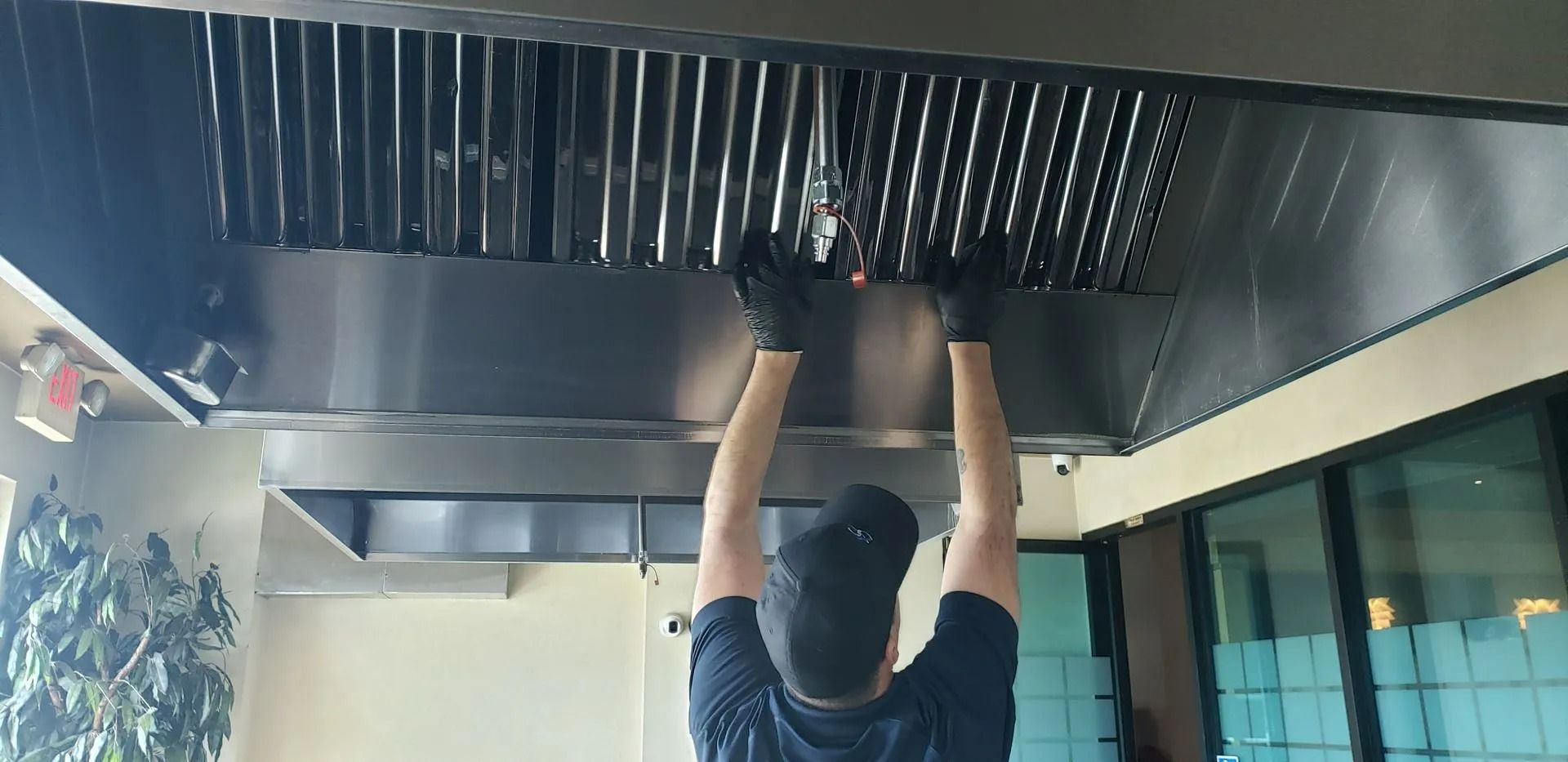
Commercial kitchen exhaust systems don’t just remove heat and smoke; they also carry grease-laden vapors through ductwork and out to rooftop exhaust fans. Even with properly functioning hood filters, a portion of that grease escapes and accumulates in the system. Over time, it can drip onto the roof and spread across roofing surfaces.
When it rains, that grease doesn’t stay in place. It’s carried into gutters, downspouts, and ultimately into stormwater systems. Unlike wastewater from your sinks, stormwater runoff is often discharged directly into local waterways without treatment, meaning rooftop grease can contribute directly to environmental contamination.
This creates a challenge to in-house F.O.G. management. While improper filter cleaning sends grease into plumbing system, inadequate rooftop containment allows grease to enter the environment from above.
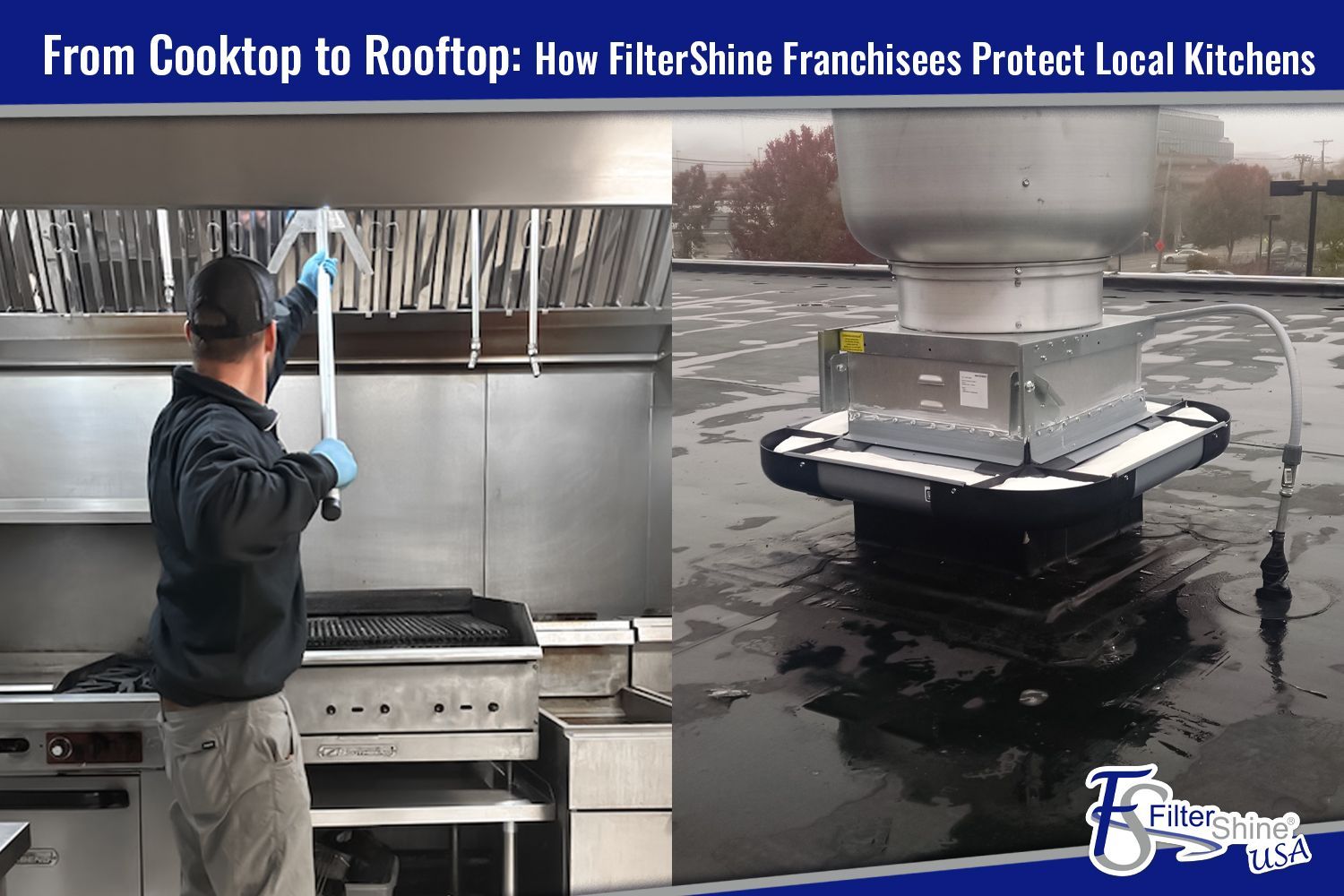
The solution is similar in principle to control grease at the source. Properly designed rooftop grease containment systems capture and hold grease at the exhaust fan discharge, preventing it from spreading across the roof or entering stormwater systems. When combined with a filter exchange program that keeps grease out of your drains, restaurants can take a more comprehensive approach to grease management.
Addressing both pathways, inside your kitchen and on your rooftop, not only strengthens compliance but also significantly reduces your overall environmental impact.
EPA & Compliance Risks for Restaurants
Because of its environmental impact, F.O.G is closely regulated. Restaurants are required to properly manage grease waste and prevent it from entering the sewer system. Failing to meet these standards can result in fines, failed inspections, and increased scrutiny from local authorities.
Beyond the financial penalties, non-compliance can disrupt operations and damage your reputation. Staying informed and proactive is essential. To better understand your responsibilities, review the EPA guidelines.
The Smarter Solution: Professional Filter Exchange
One of the most effective ways to reduce F.O.G. in your plumbing systems is to eliminate the source, in-house filter washing. This is where a professional grease filter exchange service provides a smarter alternative.
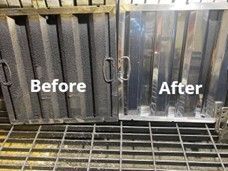
With a filter exchange program, dirty filters are removed and replaced with clean ones on a regular schedule. The cleaning process takes place off-site in a controlled environment, preventing grease from ever entering your drains. This not only protects your plumbing system but also helps ensure compliance with environmental regulations while freeing up your staff to focus on daily operations.
Why FilterShine USA is the Right Partner
At FilterShine USA, we help restaurants take control of grease management with reliable, professional filter exchange and rooftop grease containment services. Our approach is designed to simplify compliance, improve efficiency, and reduce environmental impact.
By handling the cleaning process off-site, we eliminate the risks associated with in-house cleaning and provide consistent, high-quality service you can depend on.
Small Changes, Big Impact
F.O.G. may seem like a minor byproduct of your kitchen, but its effect can be far-reaching. From plumbing issues to rooftop issues to environmental damage and compliance risks, how you manage your grease matters more than ever.
The good news is that preventing these problems is far easier than dealing with the consequences. By rethinking how grease filters are cleaned and adopting smarter solutions, you can protect your business, stay compliant, and contribute to a healthier environment.